
It's a Saturday in June. The recital just ended.
The curtain drops. Forty kids in sequins run off stage. The parents are still clapping and some crying, the way parents cry when their six-year-old lands a plié in front of a crowd for the first time.
This is the moment.
Right now, every parent in that room would pay almost anything to keep what they just watched.
And most studios do nothing with it.
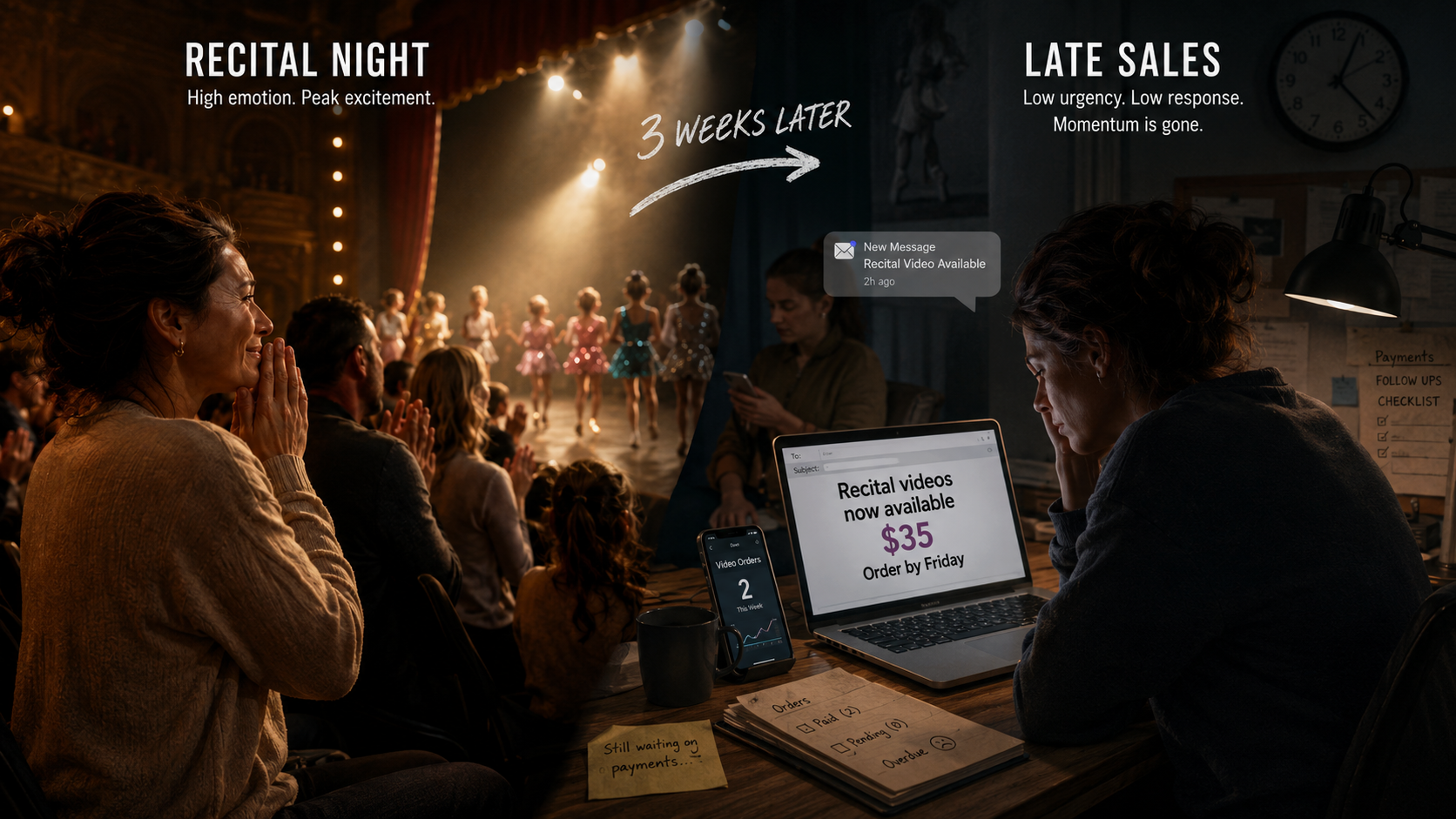
Dance recital video sales lose momentum when studios wait weeks after the event to promote them.
They film the show - maybe. Three weeks later, when the magic has worn off, they email: "Recital DVDs now available. $35. Order by Friday." A few orders. Most forget. The owner spends a month chasing payments and wondering why the thing everyone said they wanted is so hard to sell.
Here's what's really going on.
The recital video isn't a video. It's a feeling. And feelings have a shelf life.
The parent who'd have paid $50 the night of the show haggles over $35 a month later - not because they got cheaper, but because the feeling cooled.
So the studios that have this figured out sell the video before anyone has seen it. They open ticket sales, and the video sits right there next to the ticket. By the time the curtain goes up, it's already paid for.
Simple idea. The hard part is everything underneath it.
Because the moment you decide to pre-sell, you've made a promise: pay now, and I'll deliver something later. Keeping that promise and getting paid fairly for it - takes four things most studios have never set up.
First, a paywall you can put the video behind before it even exists.
And not a one-size paywall. Some parents want the whole show. Plenty only want their own kid's three minutes.
So you want to sell it both ways:
- the full recital as one purchase, or
- video-by-video
without running two separate systems. The show and the solos.
Second, protection on the file itself.
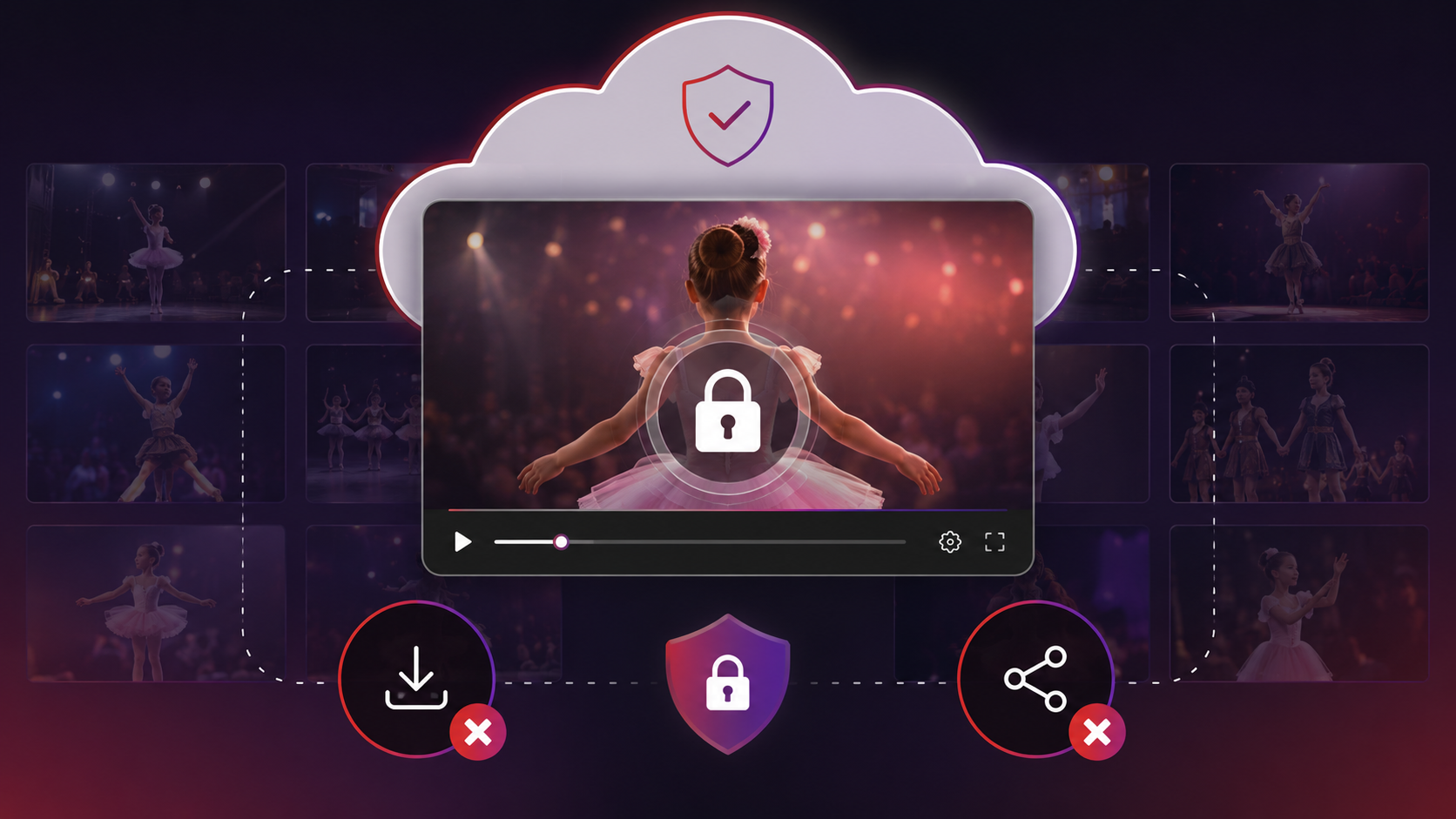
This is the leak nobody talks about. If a parent can download the video, they can text it to ten other parents. You sold one copy. Twenty families watched. Same work, a fraction of the pay. So the video needs to stay behind your paywall - streamed, not downloaded into the wild.
Third, a limit on sharing.
Same problem, different door. One login, passed around the whole class like a borrowed Netflix password. The fix is the thing Netflix already figured out: cap how many devices or households can use a single account, so one purchase stays one purchase.
None of this is about being stingy. It's about getting paid for what you made.
Fourth and this is the one that decides whether you'll keep doing it automation.
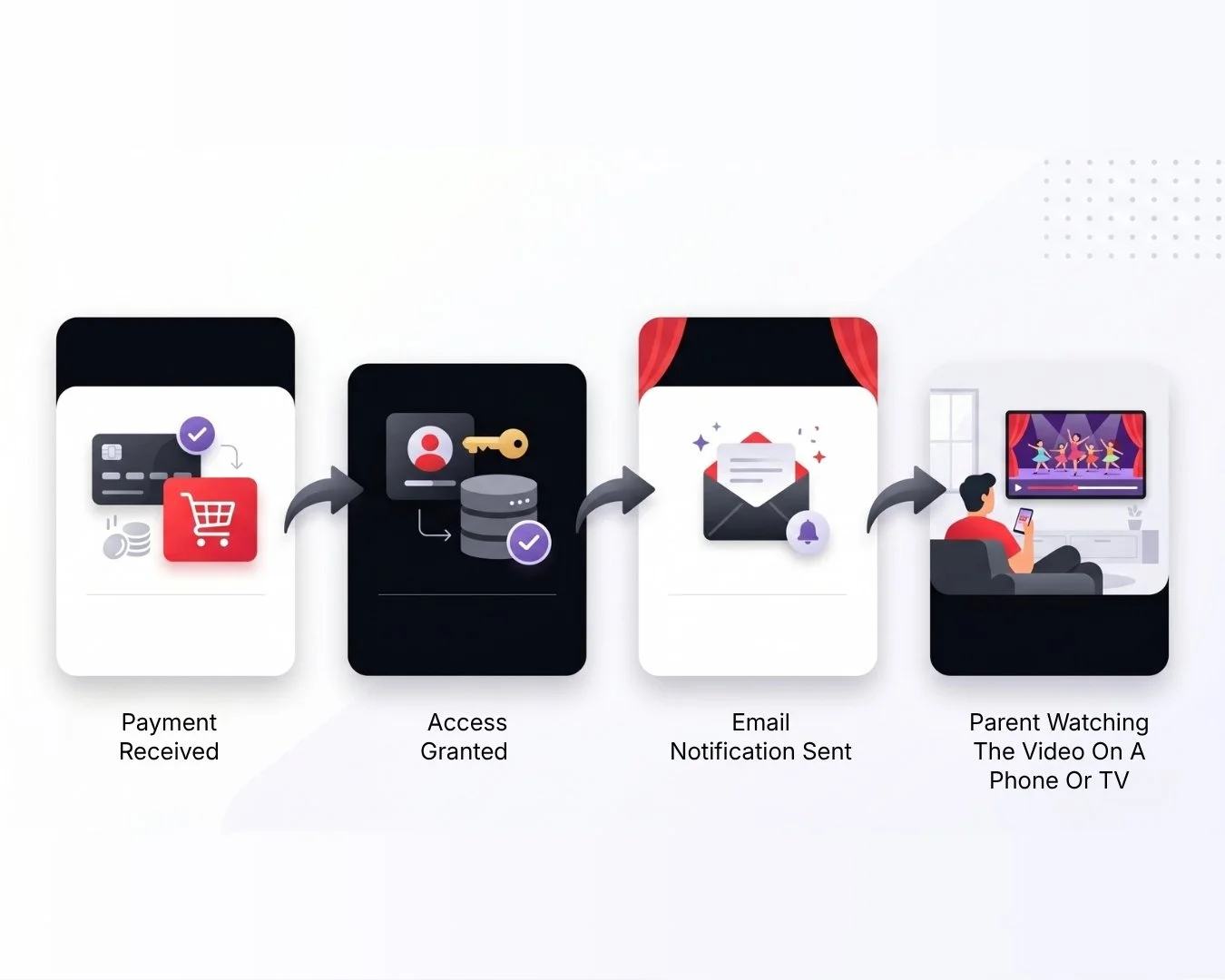
Read the first three back. A flexible paywall, protected files, controlled access - set up by hand, for every family, during the busiest week of your year? You'd quit by July. The whole thing only works if the page builds itself, the payments collect themselves, and access switches on the second someone pays. You run the recital. The selling runs in the background.
I'll be upfront: we built MediaZilla to do exactly these four things, so weigh that accordingly.
You put your video - the whole show, or each dance - behind a paywall that looks like your studio. The files are protected from downloading and re-sharing. Account access is capped, so one sale stays one sale. And it runs on automation, so recital season doesn't become a second job.
Two more things owners tend to care about once they've been burned. We don't take a commission on your sales, the money is yours. And families keep lifetime access to what they bought. Even if you cancel your subscription down the road, every parent who paid still has their video. You're not renting people their own memories.
You don't need any of this to sell a few DVDs after the show. You need it to pre-sell to take money for a promise and keep that promise cleanly, for every family, without it eating your season.
The video was always going to sell. The only questions were when you asked and whether you got paid for all of it.
Ask before the curtain goes up. Then go enjoy the recital.
Questions Dance Schools Ask Before Pre-Selling Recital Videos
Pre-selling recital videos works best when families can buy early, access stays protected, and the whole process runs without adding more work during recital season.
Why should dance schools pre-sell recital videos before the event?
Because parent interest is highest before and during the recital. After the event, the emotional moment starts to fade, and many families forget to order. Pre-selling lets studios collect orders while parents are already excited and ready to preserve the memory.
Can parents buy the full recital or only their child’s dance?
Yes. A good recital video system should let studios sell both options: the full show as one purchase, or individual dances video-by-video. This gives families flexibility without forcing the studio to manage two separate selling systems.
How do studios stop families from downloading and sharing the video?
The safest approach is to keep the recital video behind a protected paywall and stream it instead of giving families a downloadable file. This helps prevent one purchased copy from being passed around to many other parents.
What happens if one parent shares their login with other families?
Account access should be limited by device or household. That way, one purchase stays connected to one family instead of becoming a shared class login. This protects the studio’s revenue without making the experience difficult for honest buyers.
Does MediaZilla take a commission from recital video sales?
No. With MediaZilla, studios keep their sales revenue. Families also keep lifetime access to the videos they purchased, even if the studio cancels its subscription later. Parents are not renting the memory; they keep access to what they bought.